
As photovoltaic systems expand beyond traditional ground-mounted and rooftop installations into structural applications such as carports, façades, and canopies, regulatory compliance becomes significantly more complex. In Germany, one of the most stringent construction markets globally, this is where DIBt certification plays a decisive role.
Understanding DIBt and Its Role in Solar Construction
The Deutsches Institut für Bautechnik (DIBt) is Germany’s central authority for construction product approvals. Unlike conventional PV modules, which are typically classified as “non-regulated construction products,” modules intended for overhead applications—such as solar carports—must meet strict building safety requirements.
This is because, in overhead installations, PV modules are no longer just energy-generating devices; they function as load-bearing or protective construction elements. Without specific approval, they cannot legally or safely be used in such structures under German building law.
To address this, DIBt issues two key certifications:
- General Building Approval (abZ) – verifying the suitability of a product for construction use
- General Design Certification (aBG) – validating the method of integrating that product into a structural system
For PV modules used in carports or similar applications, obtaining these approvals is essential. One such example is the carport solar DIBt approval number Z-70.3-308, which confirms compliance with Germany’s overhead construction standards.
Why Standard PV Certifications Are Not Enough
Most PV modules comply with IEC standards focusing on electrical safety and performance. However, these do not account for structural risks associated with overhead installations, such as:
- Falling debris or glass breakage
- Fire propagation risks
- Long-term exposure to environmental stress under load
Therefore, German building approval PV modules must undergo additional, highly specialized testing beyond standard PV certification frameworks.
Key Testing Requirements in DIBt Certification
The DIBt certification process is comprehensive and multidisciplinary, ensuring that modules meet both construction and operational safety standards.
1. Material and Structural Integrity
Modules are tested for mechanical strength, load-bearing capacity, and durability. This includes resistance to wind, snow loads, and dynamic stress conditions typical in elevated structures.
2. Fire Resistance Testing
Fire safety is critical in public and semi-public infrastructure such as parking areas. DIBt evaluates how modules behave under fire conditions, including flammability, heat release, and fire spread characteristics.
3. Environmental Resistance
Modules must demonstrate resilience against UV radiation, moisture ingress, temperature fluctuations, and long-term weathering, ensuring performance stability over decades.
4. Factory Production Control (FPC)
Manufacturers are required to implement strict quality assurance systems to guarantee consistency across production batches.
5. Third-Party Monitoring
Independent, accredited bodies conduct ongoing inspections and audits, ensuring continuous compliance after initial certification.
From Product to System: The Role of aBG Certification
Beyond product-level approval, the General Design Certification (aBG) ensures that the installation concept itself is safe and reliable. This includes:
- Verification of engineering designs and load calculations
- On-site inspection of installation practices
- Definition of maintenance and operational procedures
This dual-layer approach—product (abZ) and system (aBG)—is what makes overhead PV construction standards in Germany among the most rigorous globally.
AESOLAR Horizon: DIBt-Certified for Real-World Applications
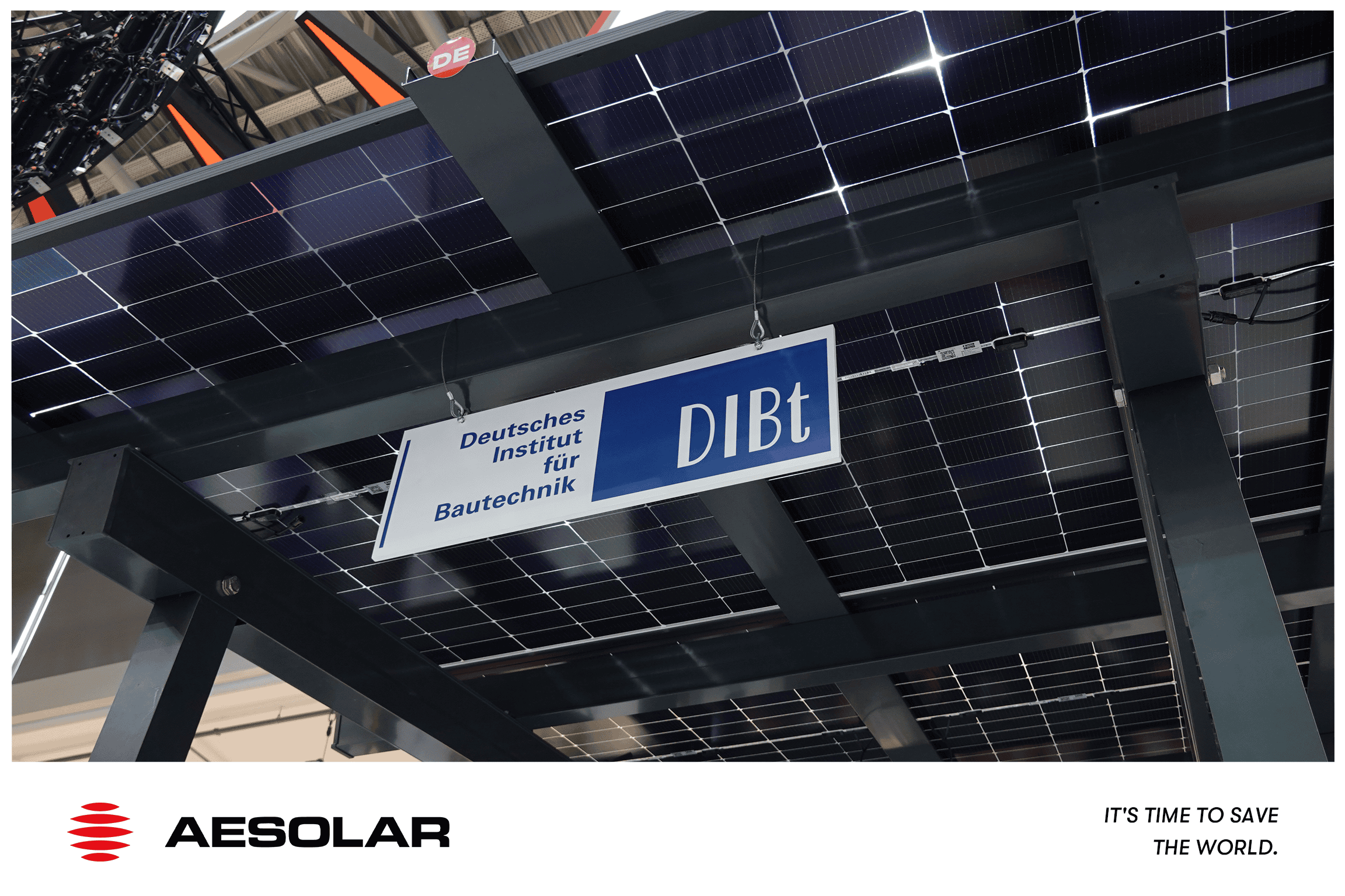
Against this regulatory backdrop, AESOLAR has successfully secured DIBt certification for its Horizon series, specifically for modules AE CMD-108BDS and AE CMD-144BDS—becoming the first Tier 1 PV module manufacturer to obtain DIBt approval for overhead applications
Approved on May 2, 2025, these modules are certified under approval number Z-70.3-308, confirming their suitability for overhead applications such as solar carports. The Horizon series is engineered to meet the dual demands of energy generation and structural reliability, making it a viable solution for projects requiring:
- Compliance with German building approval PV modules standards
- Proven performance in carport solar DIBt approval scenarios
- Long-term durability under real-world environmental and mechanical stress
With this certification, AESOLAR Horizon modules are positioned to support the growing demand for integrated solar infrastructure, particularly in Europe where regulatory frameworks are increasingly aligned with safety-first construction principles.
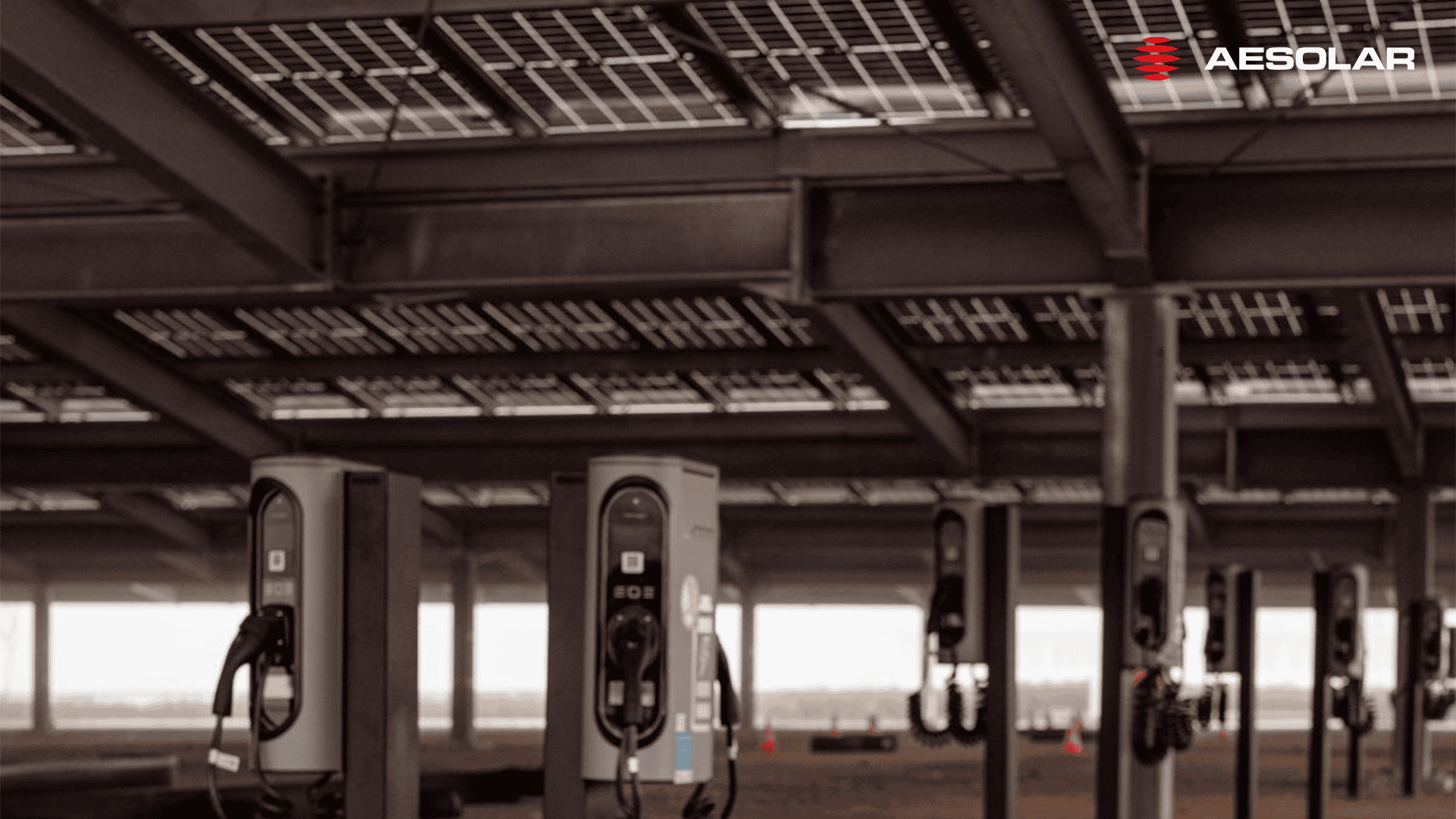
Carport Project Equippied with Horizon Module (DIBt-Certified)Enabling the Next Phase of Solar Integration
DIBt certification is not merely a regulatory checkbox—it is a technical validation of safety, reliability, and engineering maturity. In this context, Tier 1 DIBt certified solar panels represent more than bankability—they signal readiness for the next generation of structural solar applications.
AESOLAR approval number for the PV modules Horizon: Z-70.3-308